

EN
Padel
Padel Club Business Plan: The Complete Guide to Securing Bank Financing
The complete padel business plan structure to win over your bank in 2026: methodology, key figures, and a free tool to build your financial forecast.
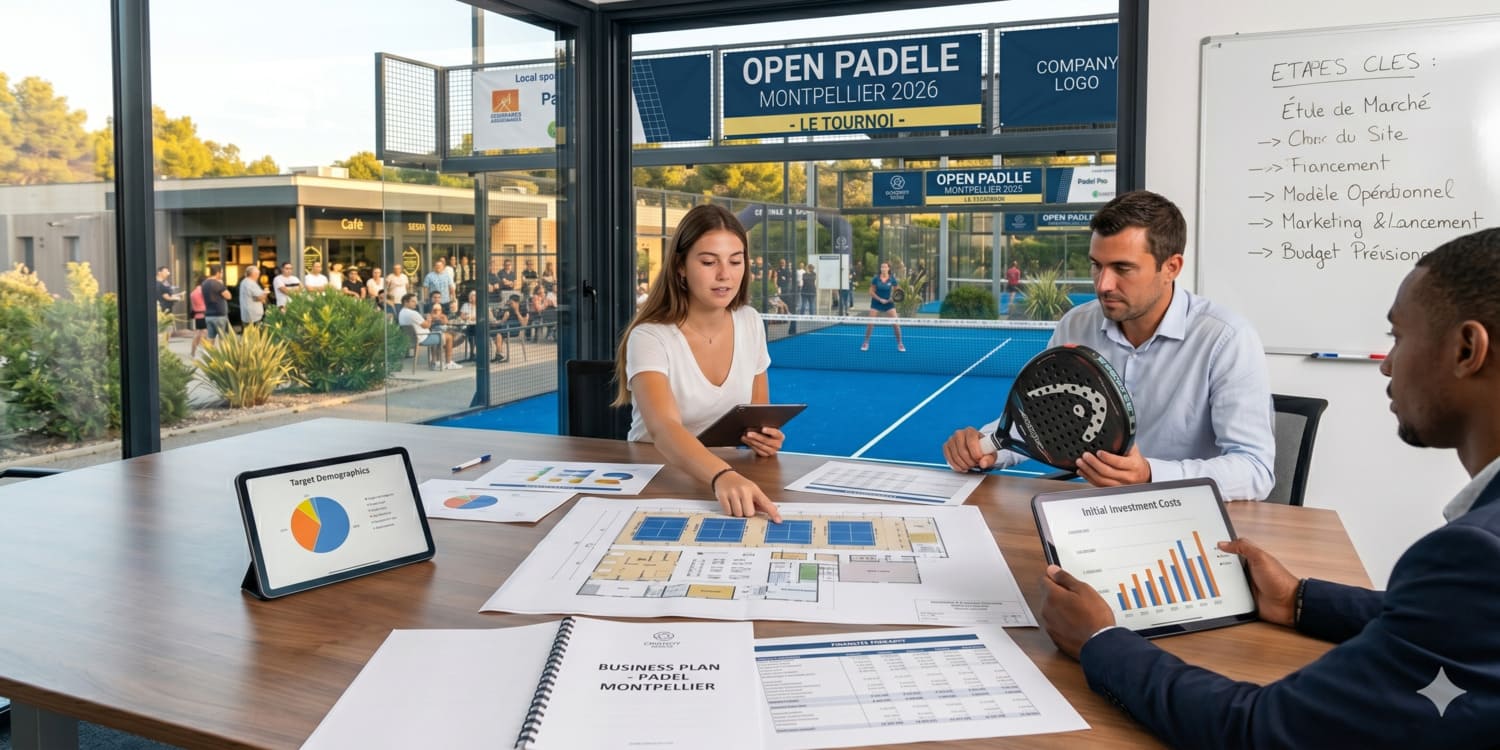
Methodology · Structure · Key Metrics · Mistakes to Avoid
Why a Strong Business Plan Is Non-Negotiable When Opening a Padel Club
Padel is experiencing massive growth. France boasts over 1,000 clubs in 2026, and demand continues to far outpace supply. However, industry momentum alone will not convince your bank to approve your loan.
Launching a padel facility requires an initial investment between €250,000 and €500,000. No financial institution will lend you that capital based on a verbal pitch and a rough spreadsheet. Your business plan is the critical document that turns your vision into a fundable project.
In 2026, lenders are significantly more demanding than they were two years ago: having reviewed hundreds of padel applications, they know what succeeds and what fails. A generic business plan simply will not cut it.
Here is the comprehensive methodology to build a robust business case—one that gets deals signed.
The Structure of a Winning Padel Club Business Plan
An impactful padel business plan is structured around 7 essential sections. The order matters just as much as the content.
1. Executive Summary (1 Page Maximum)
This is the first—and occasionally the only—page your loan officer will read thoroughly. It needs to compel them to turn the page.
What it must include:
The project in a single sentence ("Opening a 4-court indoor padel facility in [City]")
The target audience and local market potential
Total capital expenditure and financing split (equity vs. debt)
3-year projected revenue
Break-even point and estimated ROI timeline
Write this page last, once the rest of your plan is fully locked down.
2. The Management Team and Project Leadership
Lenders invest in people just as much as projects. This section must instill confidence regarding:
Your professional background and core competencies
Your connection to the sports industry and padel
Your personal equity contribution (proof of skin in the game)
Organizational structure: co-founders, key initial hires, and strategic advisors
If you don't have a background in sports facility management, that is not a dealbreaker—but you must demonstrate how you offset this, whether through an operations-focused partner or an experienced business advisor.
3. Market Research – Localized and Data-Driven
This is where most pitches fall apart. A high-level overview of national padel trends is no longer enough. Lenders want to understand: why will your facility, at this specific location, capture local market demand?
Key components required:
Local Demand: How many potential players live within a 15-minute drive? What is the demographic density of high-income households? Are there local corporate hubs that can drive corporate events and team-building revenue?
Competitive Landscape: Map out every competing facility within a 20 km radius. How many courts do they operate? Are they indoor or outdoor? What are their booking rates? What is their observable occupancy rate (test-book peak evening and weekend slots to gauge saturation)?
Positioning: What is your market angle? Premium? Community-centric? Family-oriented? Competitive play? Your concept must fill a clear, documented gap in the local market.
Target Persona: Avoid vague claims like "padel enthusiasts." Instead, specify: "Active professionals aged 30–50 within a 20-minute drive, regular players seeking peak weekday evening court availability, frustrated by booked-out facilities in the area."
4. Offering and Club Concept
This section details the exact customer proposition of your facility:
Court breakdown and infrastructure (indoor, outdoor, or hybrid)
Ancillary services (academy coaching, tournaments, pro shop, F&B bar, changing rooms, on-site parking)
Operating hours (and their correlation with court utilization)
Differentiating customer experience (seamless mobile app booking, 24/7 automated access control, loyalty programs)
Value-added premium services (clubhouse lounge, high-performance coaching, corporate partnerships)
Pitching simply "4 padel courts" lacks impact; presenting a clearly articulated concept with a streamlined customer journey builds strong credibility.
5. Marketing and Sales Strategy
How will you drive peak court occupancy from day one? How will you maximize customer retention and manage player acquisition?
Key growth levers to outline:
Pre-launch acquisition strategy (starting 3 months prior to opening)
Founding member packages (exclusive pricing + member perks)
Digital footprint (Google Business Profile, localized Instagram/Facebook campaigns, local sports influencer activations)
B2B and local partnerships (corporate wellness accounts, local sports clubs, schools, municipalities)
Tournament and community event schedule to drive ongoing engagement
Retention tactics (membership tiers, referral incentives, preferential rates)
Lenders need to see how you will generate foot traffic and bookings—not just the targets you hope to reach.
6. Financial Forecast – The Core of Your Business Case
This is the most heavily scrutinized section. It must include several comprehensive documents:
Capital Expenditure (CapEx) Plan: A complete breakdown of setup costs: court manufacturing and installation (budget at least €50,000 per court), building leasehold improvements, locker rooms, bar/lounge setup, access hardware, administrative fees, and working capital reserve.
Financing Structure: How much founder equity are you deploying? How much bank debt is required? Are you leveraging any sport or municipal grants?
3-Year Projected P&L: Gross revenue, fixed overheads, variable costs, EBITDA, and net income, modeled month-by-month for Year 1.
24-Month Cash Flow Statement: The top priority for credit risk analysts. Showing negative cash flow by month 8 is an immediate grounds for rejection.
Break-Even Analysis: At what court utilization rate does the club become profitable?
Payback Period / ROI Timeline: Typically 2 to 5 years for an efficiently managed padel venue.
To produce accurate forecasts, using an industry-specific financial modeling tool is essential—more on that below.
7. Appendices – Backing Up the Details
Court manufacturer quotes and technical specs
Commercial lease agreement or conditional pre-lease
Soil surveys and architectural/engineering assessments
Executive CVs and track records of project leads
Letters of Intent (LOIs) from corporate partners and sponsors
Third-party industry reports validating your market assumptions
Padel Industry Benchmarks to Include in Your Plan
Anchor your financial projections against established industry standards to build credibility:
CapEx per court: €50,000 to €80,000 for a turnkey indoor court
Average annual revenue per court: Around €80,000 in an optimized facility
Average court occupancy rate: 50% to 60% for established clubs; 30% to 45% in Year 1
Net profit margin: 13% to 20% of gross revenue at full maturity
ROI timeframe: 2 to 5 years depending on court setup, lease terms, and location
Average hourly court fee: €25 to €35 depending on peak/off-peak slots and regional pricing power
These benchmarks represent industry averages; your plan may vary, but you must justify every variation with clear operational rationale.
The Tool That Streamlines Your Financial Modeling
Building a padel club financial forecast from scratch in Excel takes days—and exposes you to formula errors or omitted operational costs (miscalculated payroll taxes, seasonal fluctuations, inaccurate peak-hour pricing models, etc.).
To accelerate planning and secure reliable projections, use the Doinsport Padel Profitability Calculator—a 100% free tool that models key financials in minutes:
Comprehensive initial investment breakdown
Monthly and annual revenues across 3 scenarios (conservative / realistic / aggressive)
Detailed operating expenditure (OpEx)
Break-even court occupancy thresholds
Estimated ROI timeline
Projected operating margins
You can export these results straight into your business plan deck—serving as an airtight financial baseline to refine with your accountant or financial advisor.
👉 Try the Padel Profitability Calculator
The Top 5 Mistakes That Derail Padel Business Plans
Mistake #1 – Overestimating opening court utilization. A new club typically takes 6 to 12 months to reach target capacity. Budgeting for a 65% occupancy rate in Month 1 is an instant red flag for risk managers.
Mistake #2 – Underestimating working capital reserves. Always budget 3 to 6 months of fixed operating expenses in reserve. High-potential clubs can fail early simply from a temporary cash flow squeeze.
Mistake #3 – Neglecting payroll taxes and compliance costs. Many plans show gross base wages without factoring in employer social contributions and benefits (often adding 30–40%). This significantly distorts actual operating overheads.
Mistake #4 – Overlooking seasonality. Outdoor facilities experience significant revenue swings between summer and winter. Indoor facilities have their own seasonal rhythms (peak demand in autumn/winter, dips during peak summer holidays). Model your revenue month by month.
Mistake #5 – Presenting a single scenario. A professional business case always includes 3 scenarios: conservative, realistic, and aggressive. Lenders want to see how the business withstands slower ramp-ups, not just your best-case outcome.
Managing Operations Once Your Club Is Open
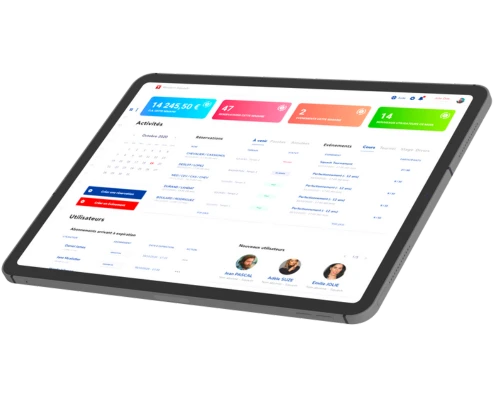
Your business plan sets the roadmap. Once the doors open, you need robust club management software to manage operations in real time: court occupancy rates by time slot, revenue breakdown by stream, coaching performance, player retention rates, and consolidated financial KPIs.
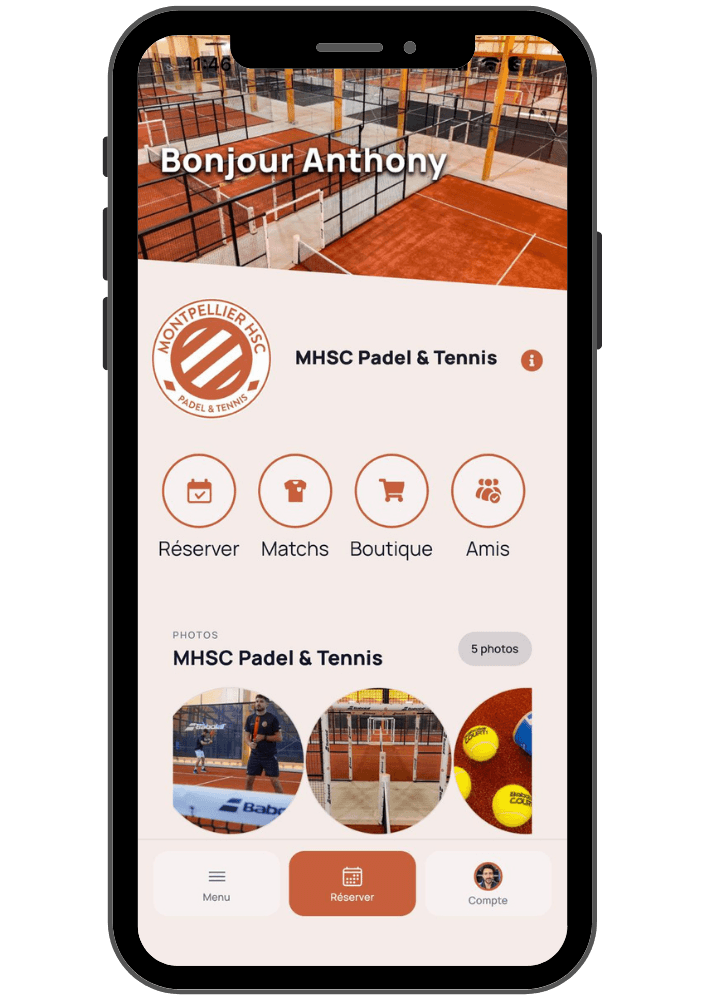
This is why operators rely on the Doinsport Club Management Platform—the all-in-one software used by over 1,000 sports facilities to scale their business. With 24/7 online bookings through a custom white-label mobile app, recurring membership management, tournament software, automated access control, and real-time business reporting: everything an operator needs to maximize court utilization and hit the financial targets mapped out in their business plan.
FAQ – Padel Club Business Plans
How long should a padel club business plan be? Aim for 25 to 40 pages total: roughly 10 pages for the executive strategy and operations, with the remainder dedicated to financial models and technical appendices. Too concise undermines thoroughness; overly long decks lose the reviewer's attention.
Should I hire a CPA or financial advisor for my business plan? Highly recommended. A financial advisor familiar with commercial debt financing will ensure your financial tables meet institutional banking standards. Typical advisory packages range from €1,500 to €3,500.
Can I submit a business plan before securing a commercial lease? Yes. You can present a conditional preliminary lease agreement subject to financing approval. This is standard market practice in commercial real estate.
What minimum equity contribution do banks require? Lenders generally expect between 20% and 30% of total project CapEx in founder equity. Below that threshold, loan approval rates drop sharply. Secured public or federation sports grants can often be counted toward equity.
Should I pitch the same business plan to multiple banks? Absolutely. Pitch at least 3 financial institutions to negotiate optimal interest rates, covenants, and repayment structures. Have a streamlined teaser deck (10 pages + executive summary) ready for initial exploratory meetings.
Ready to Build Your Padel Club Business Plan?
Developing an airtight padel business plan requires precision, but following this structured framework will set you up for success. The financial model remains the most critical component—it ultimately drives lending decisions.
To accelerate the process and validate your financial assumptions, check out the Doinsport Padel Profitability Calculator. In just minutes, you’ll generate a structured financial baseline to review with your advisory team.
Once your venue is ready to launch, Doinsport delivers the industry-leading club management platform you need to optimize operations, automate bookings, and hit your revenue goals.
Similar articles
Nov 18, 2026
Permits, financing, construction, software, pre-sales: a month-by-month reverse schedule for a padel club project, with the lead times to plan for.

Oct 28, 2026
Unlimited off-peak, discount memberships, packs and wallets: the membership plans padel clubs offer in 2026, their prices and how to set yours.

Oct 22, 2026
How much should you charge per hour for padel? 2026 market rates, peak vs. off-peak pricing, and memberships: the complete guide to setting your club's rates.

See Doinsport in action
Ready to grow your padel or tennis club?
Join over 1,000 clubs that run on Doinsport. Book a free demo and see what it can do for your club.
We're here to help.


See Doinsport in action
Ready to grow your padel or tennis club?
Join over 1,000 clubs that run on Doinsport. Book a free demo and see what it can do for your club.
See Doinsport in action
Ready to grow your padel or tennis club?
Join over 1,000 clubs that run on Doinsport. Book a free demo and see what it can do for your club.
We're here to help.