

EN
Padel
How can you increase your padel club’s court occupancy rate in 2026?
Are your courts never as full as you’d like? Discover 8 actionable levers to increase your padel club’s occupancy rate in 2026
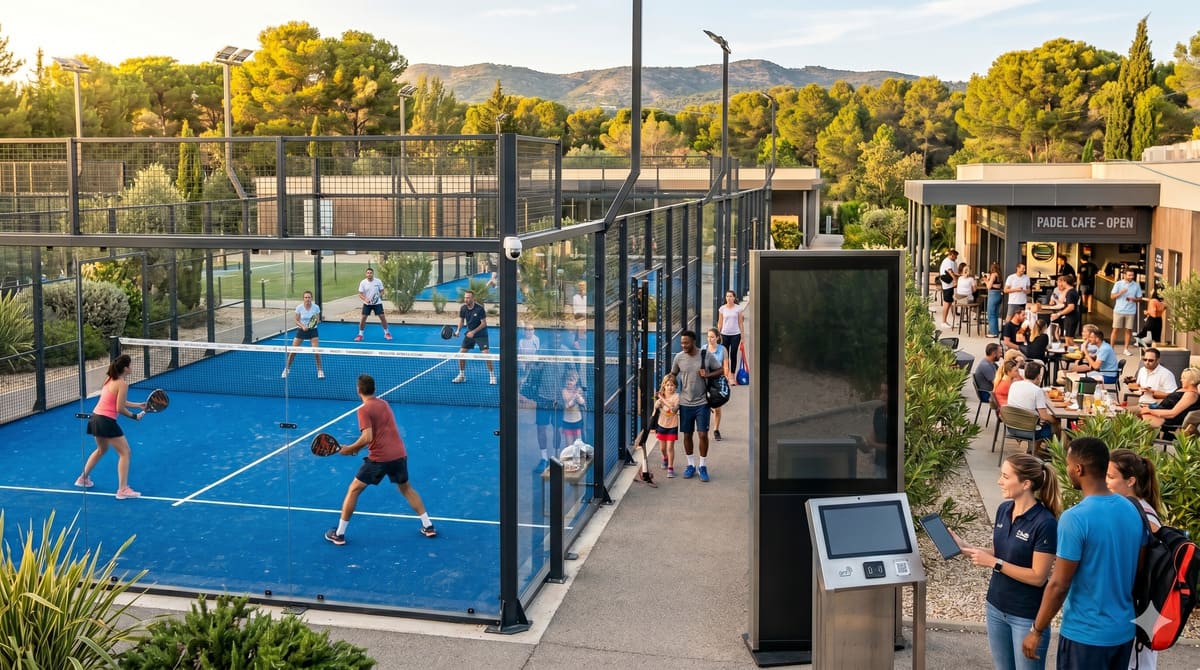
Operational Guide · 8 Actionable Growth Levers · Key Industry Benchmarks
Court Occupancy Rate: The Ultimate Growth Metric
You can have the best courts in town, a friendly team, and a vibrant clubhouse. But if your courts sit empty, your facility will simply never reach profitability.
Generating an average annual revenue of €80,000 per court and an occupancy rate above 50%, padel is proving to be a powerful economic engine for commercial sports clubs. However, this national benchmark conceals massive disparities: top-performing clubs reach 75% court occupancy, while others struggle to break 35%. The difference is not a matter of luck or location alone => it comes down to daily operational management and smart facility automation.
Player satisfaction regarding court availability is just 57% in France—the lowest-rated factor across the board. In other words, strong market demand exists, but it remains structurally unmet. As a club manager, your primary mission is to capture this demand using the right software tools and revenue-generating strategies.
Here are the 8 most effective levers to scale your court occupancy rate in 2026.
How to Calculate Your Facility's Occupancy Rate
Before you can optimize, you have to measure. The formula is straightforward:
Occupancy Rate = (Booked Hours ÷ Available Hours) × 100
Example: A club with 4 courts open 14 hours a day, 7 days a week, has 392 available court hours per week. If 220 hours are booked, its occupancy rate is 56%.
The classic trap: calculating an overall occupancy rate that hides critical disparities across time slots. A venue might average a 60% overall occupancy rate while hitting 95% during peak evening hours and only 20% on weekday mornings. These off-peak slots are where your biggest revenue opportunities lie.
Lever 1: 24/7 Online Booking
This is the foundational lever, and by far the most impactful. A player wanting to book a court at 10:30 PM for the following morning will not call your front desk. If they cannot book seamlessly from their smartphone in under 60 seconds, they will go to a competitor—or not play at all.
Today, modern players manage everything via mobile: booking courts, finding playing partners, and signing up for tournaments. Yet, many clubs still rely on outdated, manual processes—phone bookings, Excel spreadsheets, and fragmented WhatsApp groups. The result: booking errors, administrative overhead, and lost court time.
Implementing a 24/7 online booking engine with upfront payment has two immediate impacts on your court utilization: it removes all friction at the point of booking, and it drastically cuts no-shows since the court is already paid for.
Lever 2: Push Notifications to Fill Last-Minute Cancellations
A player cancels at 6:00 PM for an 8:00 PM slot. Without an automated notification system, that court sits idle. With a dedicated club app connected to your member database, you can broadcast a push notification to your player community in seconds—and rebook that court in under ten minutes.
This single automation can add several percentage points to your annual occupancy rate, recovering thousands of euros in revenue that would otherwise be permanently lost.
Pro tip: Segment your push alerts. Prioritize notifications to players who have historically booked this specific time slot or who regularly play on weekday evenings. The more targeted the message, the higher your conversion rate.
Lever 3: Dynamic Pricing for Off-Peak Hours
Offering discounted rates during weekday daytime hours is key to balancing your booking schedule. This is the core principle of dynamic pricing applied to padel and racquet sports: adjusting court rates based on demand to maximize capacity utilization across every time slot.
In reality, your evening and weekend peak slots sell out on their own. The operational challenge is filling weekday mornings and non-holiday afternoons.
Proven tactics that drive results: flash discounts for last-minute off-peak bookings (48 hours out), happy hour pricing from 10:00 AM to 12:00 PM Monday through Friday, corporate packages for recurring daytime slots, and dedicated off-peak memberships with a monthly commitment.
Lever 4: Recurring Memberships to Secure Baseline Occupancy
A player who has booked the same weekly time slot for three years provides guaranteed revenue. A casual pay-and-play user can drop off without notice. The difference between a club operating at 55% capacity and one at 70% often comes down to the percentage of court time locked in through recurring subscriptions.
Monthly or annual memberships are the most effective way to build long-term player loyalty while safeguarding your baseline occupancy rate.
Introduce recurring court reservations at a slightly discounted rate (5% to 10% off) in exchange for a monthly commitment. You secure predictable, recurring revenue, and your players get guaranteed court access. It is a win-win for everyone.
Lever 5: Unlocking Early Morning and Late-Night Slots
There is no reason your courts cannot operate 24/7 with automated access control and smart lighting. This is especially valuable in the summer when extreme midday heat pushes players to schedule matches much later in the evening or even at night.
Time slots between 6:00 AM – 8:00 AM and 10:00 PM – midnight often go unmonetized simply due to front-desk staffing costs—not a lack of player demand. In urban and suburban markets, there is significant demand from professionals who want to play before work or late after dinner.
Club managers report up to a 35% increase in revenue within three months of opening unstaffed night slots using an autonomous court management system. These incremental hours represent virtually pure profit: your court infrastructure is already amortized, and your fixed overhead remains unchanged.
Lever 6: Regular Tournaments and Social Events
Hosting monthly tournaments has a twofold impact on your utilization: it fills entire blocks of court time over a single day or weekend, and it builds a sticky community around your club—driving higher visit frequency among your players.
Tournaments deliver strong auxiliary revenue for operators—through court rental, F&B, and pro-shop sales—generating an average of €15,000 to €50,000 per event depending on the scale.
Look beyond traditional competitive tournaments. Run Americanos, corporate leagues, beginner discovery nights, and inter-club challenges: every unique event format creates an opportunity to monetize courts that would otherwise sit empty.
Lever 7: Targeted Member Communication and Re-engagement
Your player database is your club's most valuable asset. A player who has not booked a court in three weeks is at high risk of churn. A personalized, automated re-engagement message delivered at the right moment can win them back.
Segment your outreach: trigger automated reminders for players inactive for more than 10 days, deliver referral incentives to your power users, promote upcoming tournaments to past competitors, and run targeted campaigns for off-peak slots to players with daytime availability.
This targeted communication is exponentially more effective than a generic social media post. It requires a dedicated sports club management platform capable of segmenting your database and triggering personalized SMS, email, or push notifications—all from a single dashboard.
Lever 8: Real-Time KPI Tracking and Business Intelligence
You cannot improve what you do not measure. The sports facilities that scale their court occupancy the fastest are those that review their operational metrics weekly—not once a month.
Key performance indicators to track: occupancy rate per court and per time slot, cancellation rate and average cancellation lead time, revenue breakdown by stream (court rentals, memberships, coaching, tournaments, F&B), weekly new player acquisition, and 30-, 60-, and 90-day retention rates.
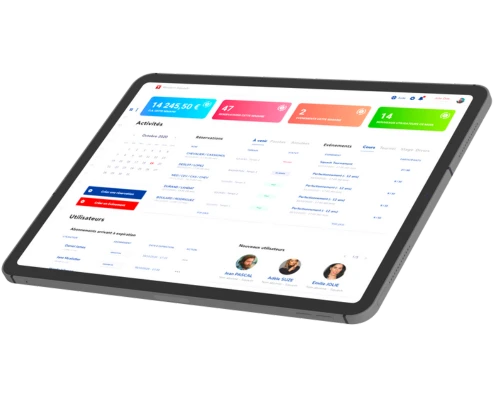
With real-time analytics, you can pinpoint exactly where your facility is losing revenue—and prioritize the right levers to fix it.
Doinsport: The All-in-One Platform to Drive Court Occupancy
The good news: executing all the strategies outlined in this guide does not require eight disconnected software tools. It requires one purpose-built sports management platform.
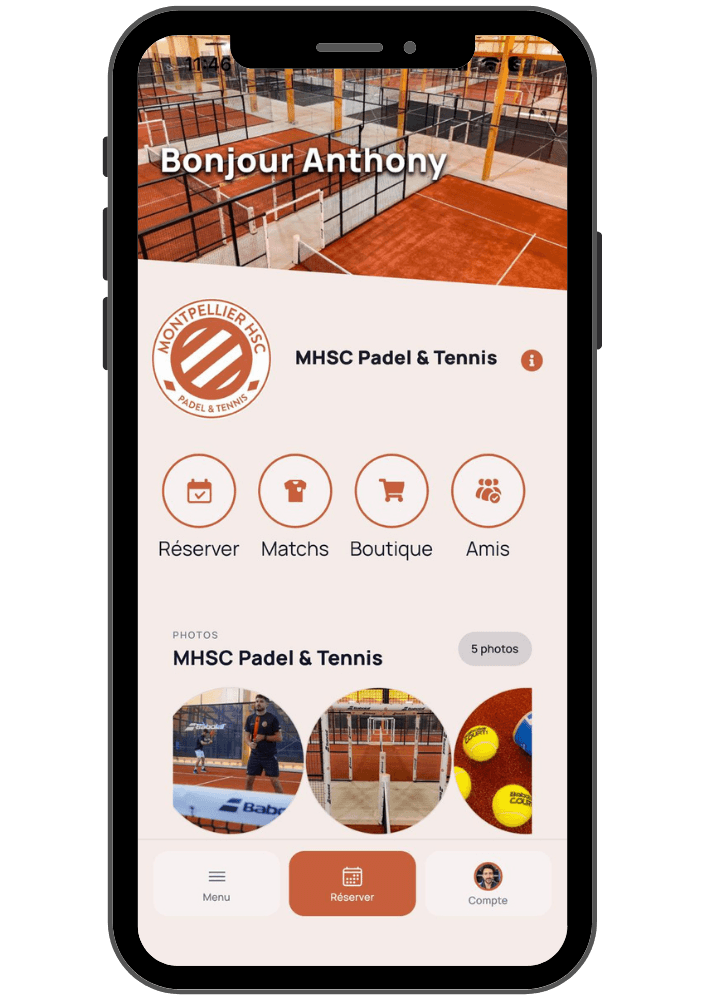
That is exactly what the Doinsport padel club management software delivers: an all-in-one solution that centralizes 24/7 online bookings, targeted push notifications, recurring membership management, tournament administration, segmented player communication, and real-time business intelligence—paired with a custom white-label mobile app branded for your facility so members can book directly from their phones.
Looking to unlock unstaffed evening and night bookings? The Doinsport autonomous court solution enables 24/7 facility access with automated smart lighting and integrated access control—requiring zero upfront capital expenditure.
👉 Book a free product tour: A club management specialist will connect with you within 30 minutes to audit your facility's current performance and map out your key growth opportunities.
FAQ - Padel Club Occupancy Rate
What is the average court occupancy rate for a padel club? The average occupancy rate across commercial clubs typically exceeds 50%, with dramatic performance gaps—often varying by a factor of two or three—between optimized urban centers and facilities running on manual, legacy systems.
What occupancy rate is needed for a padel club to be profitable? Your break-even point depends on your fixed overhead and court lease, but most business models achieve operational break-even between 45% and 55% occupancy. Beyond that threshold, every additional percentage point flows almost directly to your net margin.
How can sports clubs eliminate no-shows? Requiring upfront payment at the time of online booking is the most reliable strategy. When combined with automated SMS or push notification reminders sent 24 hours prior to the match, no-shows are virtually eradicated.
Do recurring memberships reduce schedule flexibility? On the contrary. Recurring court memberships provide the bedrock of a stable, high-occupancy schedule. They guarantee a predictable revenue baseline, allowing you to layer flexible pay-and-play bookings on top to maximize total court utilization.
Should I cut prices to fill off-peak court slots? Not necessarily through deep discounts. A modest reduction during off-peak hours (10% to 15%) is usually enough to drive daytime demand without devaluing your brand. The goal is to monetize time slots that would otherwise generate zero revenue—partial yield is always better than an empty court.
Similar articles
Nov 18, 2026
Permits, financing, construction, software, pre-sales: a month-by-month reverse schedule for a padel club project, with the lead times to plan for.

Oct 28, 2026
Unlimited off-peak, discount memberships, packs and wallets: the membership plans padel clubs offer in 2026, their prices and how to set yours.

Oct 22, 2026
How much should you charge per hour for padel? 2026 market rates, peak vs. off-peak pricing, and memberships: the complete guide to setting your club's rates.

See Doinsport in action
Ready to grow your padel or tennis club?
Join over 1,000 clubs that run on Doinsport. Book a free demo and see what it can do for your club.
We're here to help.


See Doinsport in action
Ready to grow your padel or tennis club?
Join over 1,000 clubs that run on Doinsport. Book a free demo and see what it can do for your club.
See Doinsport in action
Ready to grow your padel or tennis club?
Join over 1,000 clubs that run on Doinsport. Book a free demo and see what it can do for your club.
We're here to help.